
Top 5 Benefits of E-Signature Software
Originally published on 28 June 2023. Last updated on 6 January 2026.
As organizations race to digitize their operations, outdated paper-based workflows stand out as a major bottleneck to growth and efficiency. The global digital signature market is a testament to this shift, projected to skyrocket from USD 12.22 billion in 2025 to USD 238.42 billion by 2034, growing at a remarkable rate, according to Certinal, 2025. This explosive growth is fueled by the undeniable need for businesses to operate with greater speed, security, and efficiency.
Adopting e-signature software is no longer a luxury but a foundational component of modern business operations and comprehensive agreement management. It transforms the cumbersome task of printing, signing, scanning, and mailing documents into a streamlined digital workflow.
E-signature software replaces outdated paper processes with streamlined, secure, and fully digital workflows. Documents can be signed anytime, anywhere, without the delays and costs associated with physical paperwork. Beyond convenience, paperless processes help businesses reduce operational expenses, minimize human error, improve compliance, and lower their environmental impact by cutting down on office waste and carbon emissions.
This is just the beginning…
Here are some of the factors that drive the adoption and utilization of e-signature software solutions and other digital signature services, and how they’ll benefit many businesses, including yours:
1. SAVE TIME

The most immediate and tangible benefit of implementing e-signature software is the dramatic acceleration of the entire signing process. Traditional, manual workflows—printing documents, coordinating internal approvals, chasing physical signatures, and scanning files—often slow critical business operations and create unnecessary bottlenecks.
This challenge was especially clear for CHIMEI Corporation, a global leader in performance materials. Before adopting DottedSign, many external signing processes at CHIMEI were still paper-based, meaning it could take 2–4 weeks for contracts with international partners to be fully signed and returned.
By digitizing its signing workflows with DottedSign, CHIMEI drastically reduced these timelines. According to Denis Chen, Vice President of CHIMEI,
“What used to take 2–4 weeks to complete contract signing can now be done within a single day.”
Seamless integrations with familiar tools and digital document workflows enabled CHIMEI’s teams to initiate signing requests quickly and securely—without switching platforms or disrupting existing processes. Agreements could be prepared, sent, and signed with just a few clicks, eliminating the tedious steps of printing, scanning, and mailing.
This faster turnaround translated into shorter sales cycles, quicker onboarding, and reduced internal coordination time, giving CHIMEI a measurable operational advantage and enabling teams to keep projects moving without unnecessary delays. Reducing the time and personnel involved in document exchanges also had the added benefit of improving information security and transparency across departments.

2. ADD MORE FLEXIBILITY AND MOBILITY TO YOUR TEAM

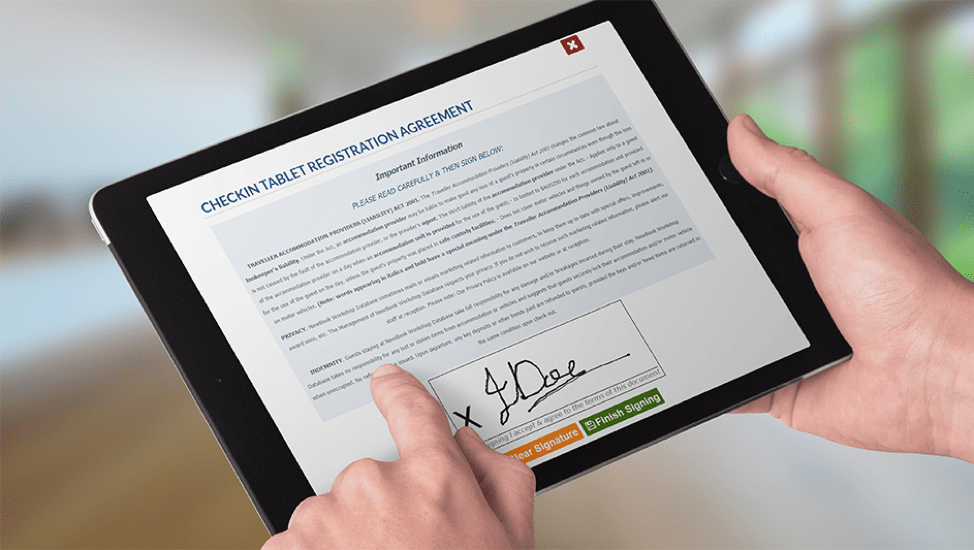
E-signature solutions remove geographical barriers, offering great flexibility and mobility in an era of remote work and global collaboration. Reliance on mobile devices in the business world is becoming commonplace, and using a mobile-based electronic signature solution for digital documents, through an electronic signature app, will help boost team efficiency and overall productivity.
With a dedicated eSignature app or mobile-responsive platform, stakeholders can participate in the document signing process on the go. Whether it’s a sales contract that needs a signature to close a deal or an HR form for a new remote employee, the ability to sign from a phone or tablet is transformative. This accessibility is important for keeping productivity high, and it helps ensure that key business processes continue without stopping, regardless of where your team or clients are located.
Signatures being stored on the cloud also provides another blanket of security as you and other users will be required to sign in to access them, preventing unauthorized access.
3. CREATE CUSTOM WORKFLOWS

Beyond simply capturing a signature, advanced e-signature platforms offer powerful workflow automation features that streamline complex agreement processes from start to finish. This capability frees up your team from repetitive administrative tasks, allowing them to focus on higher-value activities that drive business growth.
For instance, you can create reusable templates for legal documents or forms, thus avoiding the need to start from scratch every time. Electronic signature tools can automate tasks and integrate seamlessly with your signature workflow, resulting in a streamlined process for preparing and using commonly-used documents.
Additionally, certain documents may require signatures from multiple parties in a specific order. In such cases, an electronic signature tool can be customized to collect signatures in the desired order, ensuring that your workflow is always followed precisely.
4. ENHANCE DOCUMENT SECURITY

Security and legal validity are the bedrock of any trustworthy e-signature solution. Far from being less secure, digital processes offer layers of protection and verification that paper documents simply cannot match. The legal framework is well-established; in the United States, the ESIGN Act of 2000 grants electronic signatures the same legal status as handwritten ones, with similar U.S. and international eSignature laws existing worldwide.
Ensuring Security for your documents throughout the entire signing process, including the digital form, is of the utmost importance. E-signature solutions provide high-level security to protect your company’s documents by storing each iteration and saving all edits made via digital audit trails. Each electronic signature is protected by a tamper-evident seal. You are instantly alerted whenever changes are made to the document after it is signed.
As opposed to PDF readers, electronic signature software not only allows you to request signatures, but also provides a range of additional security features to safeguard your documents. With password verification options, signers are required to validate their identities via email or SMS before they can sign the document. In some instances, access to the documents can be granted after signers are provided with a link and enter the corresponding code. This helps prevent unauthorized users from accessing confidential documents. Nowadays, even iPhones can get viruses, leaving your documents in danger. Applying a trustful electronic signature will surely minimize those risks.
E-signature platforms provide comprehensive audit trails, automatically logging all events, changes, and users with a timestamp, so you don’t have to dig deep to create a digital paper trail. When you need to look at who prepared the document, signed it, and when, you can access the document’s log and retrieve the information you want. If you want to boost transparency, you may also consider having or integrating it with the best version control software systems.
5. REDUCE OPERATIONAL COSTS

Switching to paperless business processes delivers immediate and long-term cost savings by eliminating the direct and indirect expenses tied to paper-based document workflows. Costs related to paper, ink, printing, postage, physical storage, and document disposal add up quickly and often go unnoticed until they significantly impact the bottom line.
The financial burden of paper is substantial. According to Corp! Magazine, U.S. businesses lost an estimated $8 billion to paper waste, and 82% of companies still rely on paper, spending billions each year on document acquisition, usage, storage, and disposal.
On an individual level, the average office employee uses more than 10,000 sheets of paper annually, roughly equivalent to two cases of copy paper per year. With the average cost of standard copy paper at around $40 per case, companies spend approximately $80 per employee per year on paper alone before factoring in printers, toner, ink, folders, filing cabinets, shipping, and disposal costs.
Beyond material expenses, paper-based workflows create significant hidden labor costs. Research cited from PricewaterhouseCoopers (PwC) shows that companies spend an average of $20 to file a document, $120 to locate a misplaced one, and up to $220 to reproduce a lost document. These inefficiencies drain productivity and divert employees from higher-value work.
By digitizing the document signing workflow with e-signature software, businesses can virtually eliminate these inefficiencies. Documents are prepared, sent, signed, and securely stored electronically—reducing administrative workload, improving accuracy, and accelerating turnaround times. In addition to lowering operational costs, minimizing paper usage also helps organizations reduce their environmental footprint, an increasingly important priority for sustainability-focused businesses.
To maximize return on investment, it’s important to understand the pricing structure of e-signature solutions whether per user, per envelope, or via flat-rate subscriptions and choose a model that aligns with your document volume and operational needs. When implemented strategically, e-signature software not only cuts costs but also delivers measurable gains in productivity, efficiency, and long-term operational savings.
By adopting e-signature software and digital document workflows, businesses can virtually eliminate these overheads. Documents are created, sent, signed, and securely stored online, reducing manual effort, preventing errors, and speeding up turnaround times. Beyond cost reduction, going digital helps shrink your environmental footprint, a growing priority for sustainability-minded organizations.
To get the best ROI, it’s worth understanding how e-signature platforms price their services—whether per user, per envelope, or flat-rate subscriptions—so you can choose the right plan for your document volume. With the right setup, e-signature solutions not only save money but also boost productivity and efficiency across your entire organization.
PLANNING AHEAD FOR YOUR BUSINESS & ITS CLIENTS
Looking ahead, Generative AI is set to transform the eSignature landscape even further. By 2025, experts predict that AI-driven automation will take center stage across digital signing platforms—streamlining routine tasks and reducing manual errors by up to 40%, according to eSign Global, 2025. This next phase of innovation will enhance everything from contract analysis to workflow optimization, making now the ideal time to invest in a scalable, future-ready digital signature solution.
As workplaces evolve, speed and cost efficiency are more important than ever. Adopting paperless workflows and digital signing tools is a simple yet impactful way to boost productivity. You’ll save hours on administrative tasks, close deals faster, and deliver a smoother experience for your clients, all while reducing overhead costs.
DottedSign makes that transition effortless. With its clean, intuitive interface and powerful features, DottedSign helps teams of any size streamline their signing process without stretching their budget. You can start with a free trial, and if you need multiple accounts, we offer special pricing—just get in touch with our sales team to learn more.